What is Google’s Gross Profit Per Employee

Alphabet, Google’s parent company, reported gross profit of \$280.126 billion in the fiscal year 2022. As of March 31, 2023, Google had 163,959 employees, which means that the company’s gross profit per employee in 2022 was \$1,708,512.

Google’s gross profit margin is calculated by dividing the company’s gross profit by its revenue. In 2022, Google’s gross profit margin was 62.44%.

Google’s gross profit is generated from its advertising business, which includes search ads, display ads, and video ads. The company also generates revenue from its cloud computing business, its hardware business, and its other businesses.

Google’s gross profit per employee is one of the highest in the tech industry. This is due to the company’s strong competitive position in the online advertising market and its ability to generate high-margin revenue from its cloud computing business.

Unity Technologies – How Many Shares Does Larry Page Own

Larry Page owns approximately 23.8 million shares of Unity Technologies, according to the company’s June 29, 2023, 13F filing with the Securities and Exchange Commission (SEC). His stake in the company is valued at over $2.3 billion, based on Unity’s closing stock price on August 4, 2023.

Page became a shareholder in Unity Technologies in 2019, when he led a $120 million investment round in the company. He is also a member of Unity’s board of directors.

Unity Technologies is a software company that develops a platform for creating and operating real-time 3D content. The company’s platform is used to create video games, movies, television shows, and other interactive experiences.

Unity Technologies is a publicly traded company, and its shares are listed on the Nasdaq stock exchange under the ticker symbol “U.”

How Many Shares in On Running Does Roger Federer Own

Roger Federer owns approximately 3% of On Running, according to a 2021 report in Sportico. This stake is worth over $300 million, based on the company’s current market capitalization.

Federer became an investor in On Running in 2019, and he also has a partnership with the company to develop his own line of running shoes, the Roger Pro.

On Running is a Swiss company that manufactures high-performance running shoes. The company’s shoes are known for their lightweight and comfortable design.

On Running is a publicly traded company, and its shares are listed on the New York Stock Exchange under the ticker symbol “ONON.”

What Are the Key and Most Valuable Properties Owned by VICI

VICI Properties owns a portfolio of 54 gaming facilities, four championship golf courses, and 33 acres of undeveloped land across the United States and Canada.

Some of VICI’s key properties include:

  • Caesars Palace Las Vegas
  • MGM Grand Las Vegas
  • Venetian Resort Las Vegas
  • Harrah’s Las Vegas
  • The Mirage Las Vegas
  • New York-New York Hotel & Casino
  • Tropicana Las Vegas
  • Borgata Hotel Casino & Spa
  • Horseshoe Casino Baltimore
  • Hollywood Casino Joliet
  • Horseshoe Casino Columbus
  • Margaritaville Resort Casino Atlantic City
  • Queen Anne Casino Resort

VICI’s properties are leased to industry-leading gaming and hospitality operators under long-term, triple-net lease agreements. This means that VICI’s tenants are responsible for all of the operating expenses of the properties, including property taxes, insurance, and maintenance. This structure provides VICI with a steady stream of income, regardless of the performance of the underlying gaming and hospitality businesses.

How Much is the Property Portfilio of McDonalds Worth

McDonald’s property portfolio is estimated to be worth around $42 billion. This includes both the land and buildings that the company owns, as well as the long-term leases that it has on other properties.

McDonald’s owns or leases more than 38,000 restaurants in over 100 countries. The company’s golden arches are one of the most recognizable logos in the world, and its franchisees operate under fixed rates set by McDonald’s. The company has a long history of investing in real estate, and its property portfolio is a valuable asset.

McDonald’s property portfolio is worth so much because it is located in prime real estate locations all over the world. The company’s restaurants are typically located in high-traffic areas, such as near highways, shopping malls, and airports. This makes McDonald’s property portfolio very valuable to potential buyers.

In addition, McDonald’s property portfolio is also worth a lot because of the long-term leases that the company has on other properties. These leases guarantee McDonald’s a steady stream of income for many years to come.

Who Are the Largest Shareholders of LVMH and How Much Do They Own / Control

The largest shareholder of LVMH is the Arnault Family Group, which is controlled by Bernard Arnault. The Arnault Family Group owns approximately 46.84% of LVMH’s stock and 63.13% of its voting rights.

Other major shareholders of LVMH include:

  • The Vanguard Group, Inc. (9.49%)
  • T. Rowe Price Associates, Inc. (Investment Management) (5.24%)
  • Jennison Associates LLC (2.70%)
  • Janus Henderson Investors US LLC (2.57%)
  • Qatar Holding LLC (1.67%)
  • BlackRock, Inc. (1.63%)
  • AXA SA (1.34%)
  • State Street Corporation (1.28%)
  • Dimensional Fund Advisors LP (1.26%)

These shareholders collectively hold over 50% of LVMH’s outstanding shares.

It is important to note that these percentages are based on the number of Class A shares outstanding. LVMH also has Class B shares, which have ten times the voting power of Class A shares. As a result, Bernard Arnault, who owns a majority of the Class B shares, has a significant amount of control over the company.

Did Zendesk Sell and Eventually Go Private?

Yes, Zendesk went private on November 22, 2022. The company was acquired by a consortium of private equity firms led by Hellman & Friedman and Permira in an all-cash transaction that valued the company at approximately $10.2 billion. As part of the deal, Zendesk shareholders received $77.50 per share in cash.

The acquisition was the culmination of months of pressure from activist investor Jana Partners, which had been pushing for Zendesk to go private. Jana had argued that the company was undervalued as a public company and that it would be better off operating as a private company.

The acquisition of Zendesk is a sign of the growing trend of private equity firms acquiring technology companies. In recent years, private equity firms have acquired a number of high-profile technology companies, including GitHub, SurveyMonkey, and Slack.

How Many Shares of Atlassian does their CEO Own

As of February 3, 2023, Atlassian’s CEO, Scott Farquhar, owns 54,717,824 Class B shares. This represents 15.5% of the company.

Farquhar is the co-founder and CEO of Atlassian, a software company that develops products for software development teams. He has been with the company since its inception in 2002. Farquhar is a visionary leader who has helped to transform the software development industry with Atlassian’s cloud-based software solutions. He is also a strong advocate for corporate social responsibility and employee success.

What Do Analysts Think the One Year Price Target is for Nu Holdings (NU)

Analysts have a wide range of price targets for Nu Holdings in the next 12 months. The median price target is $7.85, with a high of $11.00 and a low of $4.00.

Here is a breakdown of the price targets from a few different analysts:

  • Morgan Stanley: $10.00
  • Barclays: $8.00
  • Credit Suisse: $7.50
  • Jefferies: $7.00
  • Evercore ISI: $6.50

These price targets reflect the analysts’ view of Nu Holdings’ growth prospects and valuation. The median price target of $7.85 suggests that analysts believe Nu Holdings is fairly valued at its current price. However, the high price target of $11.00 suggests that some analysts believe the company has the potential to grow significantly in the future.

Farizon has Raised $600 million to Expand its Truck Unit Outside of Mainland China

Farizon Auto, the truck unit of Chinese automaker Geely, has raised $600 million in a Series A funding round led by Geely Holding Group. The funding will be used to support Farizon’s expansion outside of China.

Farizon Auto was founded in 2021 and is headquartered in Hangzhou, China. The company develops, manufactures, and sells commercial vehicles, including trucks, buses, and vans. Farizon’s products are currently sold in China, and the company plans to expand to other countries in Asia, Europe, and South America in the coming years.

The $600 million funding round was led by Geely Holding Group, which is the parent company of Geely Auto. Other investors in the round include CMB International Capital, Hillhouse Capital, and Sequoia Capital China.

Farizon Auto’s CEO, An Conghui, said that the funding will help the company “accelerate its global expansion and become a leading player in the commercial vehicle market.”

The global commercial vehicle market is expected to grow at a compound annual growth rate (CAGR) of 4.4% from 2022 to 2027. This growth is being driven by the increasing demand for commercial vehicles in emerging markets such as China, India, and Southeast Asia.

Li Auto Not Planning to Expand Overseas Before 2025

Li Auto CEO Li Xiang has confirmed that the company has no plans to expand overseas by 2025. In an interview with TechNode, Li said that the company is focused on consolidating its position in the Chinese market before expanding to other countries.

Li Auto is a Chinese electric vehicle maker that was founded in 2015. The company’s first model, the Li One, was launched in 2019. The Li One is a hybrid SUV that combines an electric motor with a gasoline engine. The Li One has been a success in China, with the company selling over 100,000 units in 2022.

Li Xiang said that Li Auto is not currently considering expanding to overseas markets because the company wants to focus on improving its products and services for the Chinese market. He said that the company is also concerned about the challenges of expanding to other countries, such as different regulations and infrastructure.

However, Li Xiang did not rule out the possibility of Li Auto expanding overseas in the future. He said that the company will “continue to monitor the global market” and “make decisions based on the best interests of the company.”

Add Foreign Credit Cards and Use Them in WeChat Pay in China

WeChat Pay, the popular mobile payment app in China, has announced that it will now accept foreign credit cards for payment in China. This is a major development for WeChat Pay, as it will make it easier for foreign tourists and businesses to use the app in China.

To use WeChat Pay with a foreign credit card, users will need to add their card to their WeChat Pay account. They can do this by going to the “Wallet” tab in WeChat and clicking on the “Add Credit Card” button. Once they have added their card, they will be able to use it to make payments at any merchant that accepts WeChat Pay.

WeChat Pay’s decision to accept foreign credit cards is a sign of the company’s growing global ambitions. The app is already popular in China, but it is also looking to expand its reach to other countries. Accepting foreign credit cards will make it easier for WeChat Pay to attract users outside of China.

NuBank vs Barclays – is NuBank Overvalued?

NuBank (Nu Holdings) is pushing the banking industry in Brazil, Mexico and Colombia.

I have been wanting to invest in NuBank for some time, but I have thought for the past year or so – that their market cap has become so large that they are simply just un-investable at these levels.

To prove this was the case I thought I would do a very simple side by side comparison with a legacy bank that is predominantly in key markets.

MetricNu HoldingsBarclays
Assets Under Management$10.2B$2.3T
Number of Customers30M48M
Revenues$1.2B$25.4B
EBITDA$-78M$9.3B
Countries350
Market Cap$35 billion$28 billion

I know NuBank is in 3 emerging markets – with at least 200 million people in those countries that are currently unbanked. However, even if NuBank was able to have 100 million customers – expand their product lines and then start to really focus on other markets – do you think they can really grow to the AUM or sheer network size of Barclays?

Or is this a perfect short sell position?

What are Wise.com Interest Accounts?

Wise.com Interest Accounts are a new product that allows customers to earn interest on their USD, GBP, and EUR balances. There are no balance minimums or fees involved, and customers can still send, spend, or hold their money as they normally would.

Wise stores customer funds with program banks, which generates interest. The current variable annual yield on USD balances is 4.79%, GBP balances is 4.22%, and EUR balances is 2.83%.

To opt in to the Interest feature, customers simply need to open the Wise app or website and go to their existing USD, GBP, or EUR balance. They can then click on the “Interest” button to add the feature.

Wise.com Interest Accounts are a great way to earn a little extra on your money while still having the flexibility to use it as you need.

Did Atlassian Ever Raise Any Primary Outside Funding

No, Atlassian never raised any primary funding. The company was founded in 2002 by Mike Cannon-Brookes and Scott Farquhar, who bootstrapped the company with their own savings. Atlassian went public in 2015, and it has been profitable ever since.

Here are some of the reasons why Atlassian never raised primary funding:

  • The company was founded by two experienced entrepreneurs who had a clear vision for the company.
  • The company’s products were well-received by the market, and they were able to generate enough revenue to self-fund.
  • The company’s founders were reluctant to give up control of the company to outside investors.

Atlassian’s decision to not raise primary funding has been a major factor in its success. The company has been able to maintain its independence and focus on its long-term goals. It has also been able to avoid the dilution of its ownership that often comes with venture capital funding.

What3words – Raising Crowdfunding with one of the Worst Profit and Loss Statements I have Seen in a While

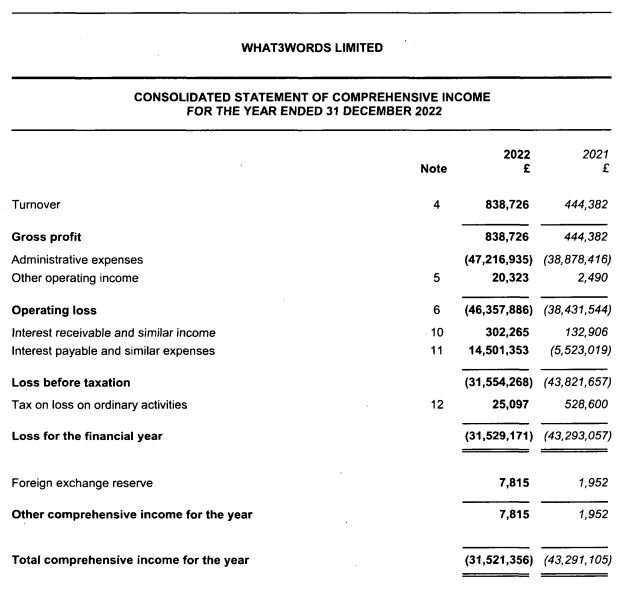
what3words is currently raising funding via crowdfunder – Crowdcube. I have always found What3words quite an interesting concept, so I thought I would dig into their numbers.

On the crowdcube pitch – it states – Over £100M in all-time funding – https://www.crowdcube.com/companies/what3words-2/pitches/lz91xq.

Why is what3words crowdfunding for a target of £1m when they have received over £100m though the company life – marketing purposes only ???

Attached is their P&L for 2022. While they have nearly doubled revenues from 2021 to 2022 – it still seems a giant world away from where they need to be to have raised over £100m in funding. They need to over 10x their current revenues to even get to a breakeven on the current valuation size.

Its going to be very interesting to see if this is possible and if it really solves a giant real world problem!

How Much Money Did Bird Mobility Raise Before Going Public?

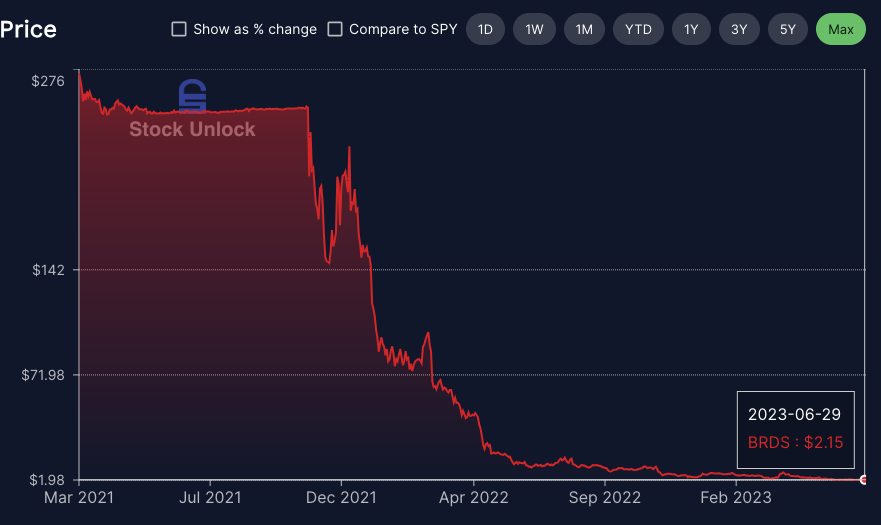
Bird Mobility has to be the biggest bomb of Venture Capital in the past 10 years.

The company was founded in 2017 – and raised $2.25 billion in venture capital before going public in June 2021. Since that time it hasn’t really gone to plan in any way – market, valuation, revenues, operations, etc.

At todays date – Bird which is public on the NYSE under the ticker – BRDS – has a Market Cap of $26 million.

It might as well be worthless at this point!

How Much Cash Does Costco Have Currently?

Costco Wholesale Corporation, commonly known as Costco, is one of the largest retail giants in the world. It operates a chain of membership-only warehouse clubs and is known for its low prices on a wide range of products. While Costco is a publicly traded company, it is always interesting to know how much cash it has on hand.

According to its financial reports, as of the end of the fiscal year 2020, Costco had a total cash and cash equivalents of approximately $8.2 billion. This is a significant increase from the previous year when it reported $4.9 billion in cash and cash equivalents.

Costco’s healthy cash position can be attributed to its strong financial performance and its ability to generate cash flows from its operations. In the fiscal year 2020, Costco reported a net income of $4 billion, an increase of 9.7% compared to the previous year.

It is also worth noting that Costco has a history of returning value to its shareholders through dividends and share buybacks. In the fiscal year 2020, the company returned approximately $3.6 billion to its shareholders in the form of dividends and share buybacks.

In conclusion, Costco is a financially healthy company with a strong cash position. Its ability to generate cash flows from its operations and return value to shareholders makes it a desirable investment for many investors.

Current Wise.com Fees in the UK

Wise.com (formerly known as TransferWise) is an online money transfer platform that has become increasingly popular in recent years. One of the reasons for its popularity is its low fees, which have made it an attractive option for people looking to send money abroad.

However, with the recent changes to the fees structure, it’s important for users to be aware of the current fees before making any transactions. Here’s an overview of the current Wise.com fees in the UK:

Transfer Fees

Wise.com charges a transfer fee, which is based on the amount you are sending and the currency you are sending it in. The fee is usually a percentage of the total amount being sent and can range from 0.35% to 2% of the total amount.

Exchange Rate

Wise.com uses the mid-market exchange rate, which is the rate that banks use when trading currencies with each other. This means that the exchange rate you get is usually better than what you would get from a bank or other money transfer service.

Additional Fees

In addition to the transfer fee, Wise.com may also charge additional fees for certain transactions. For example, if you are sending money to a bank account that is not in your name, you may be charged an additional fee. Similarly, if you are sending money to certain countries, you may be charged an extra fee due to local regulations.

Conclusion

Overall, Wise.com fees are still relatively low compared to traditional banks and other money transfer services. However, it’s important to be aware of the current fees before making any transactions. By doing so, you can ensure that you are getting the best deal possible and avoiding any unnecessary fees.

Why Uber Doesn’t Enter Small Regional Towns in the UK

Uber, a ride-hailing giant, has become a popular choice for those looking for a quick and affordable ride in cities worldwide. However, if you live in a small regional town in the UK, you may find that Uber is not available in your area. In this blog, we will explore why Uber doesn’t enter small regional towns in the UK.

Lack of Demand

One of the main reasons why Uber doesn’t enter small regional towns in the UK is due to the lack of demand. Uber operates in locations where there is a high demand for their services. This is because Uber’s business model relies on having a high volume of rides to generate revenue. Small regional towns may not have enough people or traffic to make it worthwhile for Uber to operate in those areas.

Competition

Another reason why Uber doesn’t enter small regional towns in the UK is due to competition. In small towns, there may be local taxi services that dominate the market. These taxi services may have an established customer base and have been serving the local community for many years. For Uber to enter these markets, they would need to compete with these established taxi services, which may not be financially viable.

Infrastructure

Uber also needs a reliable infrastructure to operate. In small towns, the infrastructure may not be developed enough to support Uber’s operations. For example, there may not be enough drivers or vehicles available to meet the demand for Uber services. Additionally, the roads and transportation systems in small towns may not be as developed as those in larger cities, which could make it difficult for Uber to operate efficiently.

Conclusion

In conclusion, Uber doesn’t enter small regional towns in the UK due to several reasons, including a lack of demand, competition, and infrastructure. While Uber may not be available in these areas, there are still other transportation options available, including local taxi services and public transportation.