Zoho Has a Strong Product Portfolio – but No Plans to Go Public Just Yet

Zoho is a privately held software development company that offers a wide range of products for businesses of all sizes. The company was founded in 1996 in India, and it has since grown to become a major player in the software industry.

One of the most notable aspects of Zoho is its extensive product portfolio, which includes solutions for various business functions such as customer relationship management, accounting, human resources, and more. Some of their popular products are CRM, Mail, Office Suite, Creator, and Books.

Zoho CRM, for example, is a comprehensive CRM solution that helps businesses manage their sales, marketing, and customer support activities. Zoho Mail, on the other hand, is a web-based email service that offers a range of features such as calendar, contacts, and tasks.

In addition to its diverse product offering, Zoho is also known for its commitment to customer service and support. The company offers a wide range of resources, including documentation, tutorials, and webinars, to help customers make the most of its products.

Despite its success, Zoho has no plans to go public. According to the CEO, Sridhar Vembu, the company is focused on building a sustainable business model, rather than chasing short-term gains. He believes that going public would pressure the company to focus on meeting quarterly earnings targets, rather than long-term growth.

However, it’s worth noting that this doesn’t mean that Zoho will never go public. The company could change its mind in the future if it feels that going public would be in the best interest of its shareholders.
Quick Salesforce Company Overview, Its Current Free Cash Flow (FCF) Position and Why It’s Important

Salesforce is a cloud-based customer relationship management (CRM) software company that has experienced significant growth in recent years. The company has a diverse range of products, including Sales Cloud, Service Cloud, Marketing Cloud, and more.

One important metric for evaluating a company’s financial health is free cash flow (FCF), which is the amount of cash a company generates after accounting for capital expenditures. FCF is important because it shows a company’s ability to generate cash and pay dividends or make acquisitions.

For Salesforce, the company’s FCF has been consistently positive in recent years, indicating a strong financial position. In the most recent quarter, Salesforce reported a FCF of $1.4 billion, up from $1.1 billion in the same quarter last year. This represents a 27% year-over-year growth in FCF.

This strong FCF position has allowed Salesforce to make strategic acquisitions, such as its $27.7 billion acquisition of Slack. The company also has a history of returning cash to shareholders through share buybacks and dividend payments.

In addition, Salesforce’s financial position has been supported by its subscription-based business model, which provides a steady stream of recurring revenue. The company has also benefited from the shift to remote work and digital transformation, as more companies turn to Salesforce’s cloud-based CRM solutions.

In summary, Salesforce’s strong free cash flow position has allowed the company to make strategic acquisitions and return cash to shareholders. The company’s subscription-based business model and the shift to remote work have also supported its financial position. This makes Salesforce an attractive option for investors looking for a company with a strong financial position.

Uncovering the Hidden Fees of Distrokid

Many musicians are signing up for DistroKid’s music distribution service, but they may not be aware of all the hidden fees that can be charged. This post will explore DistroKid’s hidden fees, explaining what they charge and how to avoid paying too much.

What hidden fees does DistroKid charge?

DistroKid charges an annual fee for the use of their service. This fee specified on their website is $19.99. However, many users don’t realize there is an additional fee for each album or song they upload. This fee is $9.99 per album and $0.99 per song. If an artist is uploading many albums or songs, these fees can add up quickly.

What other hidden charges are there?

In addition to the annual fee and per album/song fee, DistroKid also charges a processing fee of $1 per album/song. This fee is charged each time an album or song is uploaded, so costs can add up quickly if musicians are uploading a lot.

There is also a $2.99 fee for sharing an album or song with a friend. This fee is charged each time a user shares a song or album with someone, so costs can add up quickly.

DistroKid offers a useful music distribution service for musicians, but it’s important to be aware of the hidden fees they charge. Understanding these fees can help musicians avoid paying too much for the use of DistroKid.

AI Generated Image Copyrights – Is It Really OpenAI?

The world of AI generated images and copyright ownership over the images created – is a very interesting world indeed. 

OpenAI Dall-E 2 images as the example: 

“To use DALL-E 2, you have to agree to OpenAI’s Terms of Use. According to these terms, OpenAI actually owns the images you create (which the Terms of Use call “generations”). OpenAI graciously grants you the right to sell your DALL-E 2 images (assuming you can somehow persuade someone to pay you for an image they can copy for free).

If that feels like the maker of the paintbrush telling Monet what he gets to do with his painting, that’s understandable.

To add insult to injury, OpenAI’s terms go further. Just to make it perfectly clear, you expressly assign any rights you might have in your image (whatever those might be) to OpenAI by contract. As the owner of the image, OpenAI can grant other people the right to reproduce, publish, or sell images that you create with DALL-E 2. You could find yourself in the position of walking into a store and seeing it selling your DALL-E 2 masterpiece on cheap T-shirts, and there would be nothing you could do to stop it.”

Tencent Music Entertainment Set to List on Hong Kong Stock Exchange in Coming Days

It has been reported that Tencent Music Entertainment will be performing a secondary listing in Hong Kong in the coming days.

China’s TME, home to three of the country’s leading music streaming services; QQ Music, Kugou and Kuwo.

The secondary listing plan was announced by TME Executive Chairman Cussion Pang alongside the firm’s Q4 2021 and FY 2021 results.

This will be a very big listing for the Hong Kong Stock Exchange.

“We are pursuing a secondary listing on the Main Board of the Hong Kong Stock Exchange through a listing by way of introduction (which is a direct listing without any offering of new shares), subject to regulatory approvals,” said Pang.

It will be interesting to see in the coming year if TME also decides to keep their NYSE listing or whether they decide to pull out of the US market.

Kobalt Sells to Francisco Partners (Private Equity) – Loss for Independent Music Industry

It was announced a few days ago that Kobalt has sold to private equity firm – Francisco Partners.

The acquisition was price around $750 million and Francisco Partners acquired 90% of Kobalt. The remaining 10% will be split between Matt Pincus’s MUSIC, plus Dundee Partners and also Willard Ahdritz (founder of Kobalt). (Pincus will join the Board of Kobalt post the deal closing.)

Kobalt has always been the poster child of the independent music industry for music publishing rights. It’s a huge shame to see them sell to private equity instead of trying to push on further and remain an independent firm.

Over time it will be interesting to see if Francisco Partners decides to hold on to Kobalt or look to further offload the assets as they appreciate in value.

Either way… Kobalt has had amazing success over the years and its great to see them in a position where they could potentially grow even further.

p.s. Im very bullish on AMRA

Creating a Brand is Hard and It Takes at Least 5 Years!

The other day we official launched RouteNote Create under the RouteNote umbrella.

RouteNote Create was originally intended to be a standalone product – but I learnt a lot about starting a brand over the past 12 months and it is getting harder and harder with time to build meaningful brands online. The landscape and places you need to be visible are getting larger and larger and it’s very difficult trying to keep them all up to date and heading in the same direction with the same branding, tone of voice and message.

Note to self – If you are going to build a brand – then make sure it focuses on a new customer type and expect it to take at least 5 years to really show fruit!

How do you check if Google AdSense ad code is inserted correctly?

I have recently added Adsense to Crenk.

I wondered how long it takes before the ad code starts to show correctly on your site once it has been added.

Answer = random.

If your using the same Google account or the same IP address as you did when you inserted the code then Google won’t show you an ads and you will see a big white blank space.

However, if you get in touch with a friend and get them to test the site for you then they should be able to generally see the ads. It normally takes a few hours after the ad has been inserted, but sometimes it can be faster.

Synchedin – Music for All Creators – Unlimited Music for Your Videos

Creators are always looking for great music – that’s why we created Synchedin! But Synchedin also allows the musicians to finally get a strong revenue share from a licensing service!

The music is fully controlled by Synchedin and is completely safe to use across social media, etc, globally.

For only $4.99 per monthly – creators now have an amazing choice of great tracks and the catalogue is growing daily.

Wise Goes Public Today on LSE – Great Investment Opportunity

Wise is one of my favourite companies and has been for a long time.

Today Wise goes public on the London Stock Market – under the ticker – WISE.

They have been a leader in the P2P money transfer space forever, but I think they have a huge number of opportunities in adjacent markets to enter.

Today they will go public for around $7 billion USD.

I can easily see this company being worth $70 billion within 3-5 years.

Investors With Inflated Ego

Do you need to have a big ego to be an investor?

I have had an experience for a long time now with one investor who for the most part is your perfect type of investor (silent and then helps when required). However, the only problem is that they tend to over inflate their involvement to everyone they know (even to the point of flat out lies), which then end up making their way back.

Why?

Why can’t some people just be happy with what they have? Why can’t they simply say they have got the best investment of their lives and they didn’t even need to do anything apart from be in the right place at the right time with a little bit of money at Seed stage?

Venture Capital is a Game of Outliers – Here are the Numbers / Chances of Success

Venture Capital by Numbers:

Venture Capital business is 100% a game of outliers

  • 4000 venture fundable businesses per year
  • 200 will get by top tier Venture Capital
  • 15 will some day get to $100 million in revenue
  • Those 15 – provide 97% of all the returns for the entire Venture Capital category for the year.

Companies Get Harder as they Get Larger (not easier)

It’s funny… when you start a company you think the larger it gets the easier it is going to be – as you’re able to start handing off jobs and deligate your team.

However, no one really explains to you the larger it gets the harder it actually gets.

Yes.. you can hand off those jobs to the other members in your team and they can take complete autonomy over the decision making, but there are all the little things that no one ever talks about – culture, strategy, team structure, heirarchy, wages, policies on pretty much everything from HR to Finance.

Sometimes a lifestyle business in which the owner can have an amazing lifestyle really is the best way to go!

What is meant by NFT?

Non-Fungible Token. Never seen the word “fungible” before? Hint: it has nothing to do with mushrooms, and do not feel bad that that’s where your brain went first (totally not trying to make myself feel better).

non-fungible token (NFT) is a unique entry on a blockchain which is not interchangeable with any other (not fungible).

NFT – How do they work.

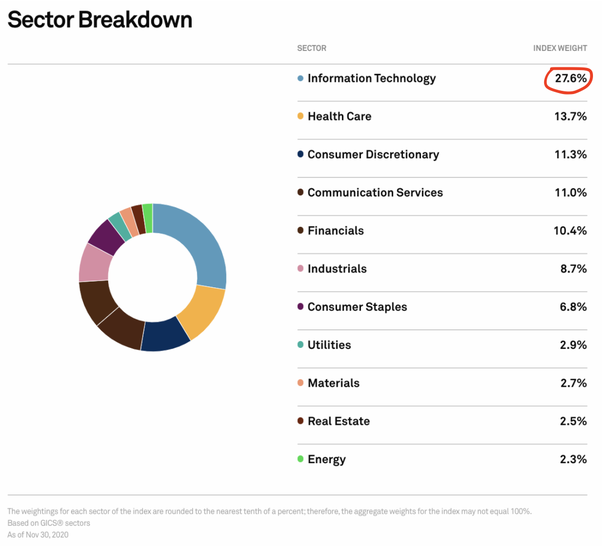
Is the S&P 500 Over Weighted in Tech Stocks or Not?

The S&P 500 is an index of some of the leading companies in the United States. The S&P 500 doesn’t push extremely high in one area as its supposed to show a cross section of America.

Here is the breakdown the S&P 500 by Market Sector:

As you can see there is a very broad cross section of companies in all sectors of America. Technology is the leading sector, but it’s not the whole S&P 500.

Free Spotify Music Distribution within 48 Hours!

There are a growing number of musicians and labels all over the world that would like to get their music live for Free in Spotify! Music distribution to Spotify and other services can take some time and the vast majority of them have poor customer service – however, you should check out RouteNote.

RouteNote is a very large music distribution service that allows artists and labels to get their music live in Spotify and other stores for free within 48 hours. This is outstanding!

RouteNote is free to create an account and artists can upload for free and keep 85% of the royalties with monthly payments straight into your Paypal account or International Bank Account.

Im a huge fan so click here to take a look for yourself!

What is Slaps.com and Who Owns It

Philip Kaplan seems to be the owner of Slaps.com, which is a new music website. Phil is a serial entreprenuer who seems to create a lot of startups and then a few years in will get a little bored and start a new project.

Slaps.com seems to be a very early and very basic Soundcloud streaming services, but with basically no features and hip hop heavy.

Warren Buffett: Amazon’s Jeff Bezos Has Changed The World

Warren Buffett’s views on Jeff Bezos and how he has changed the world. 

Why this matters: Warren Buffett for a long time has been watching Jeff Bezos and commenting on how amazing the run of Amazon has been. It would have been very interesting if Warren Buffett understood the technology industry at the beginning of the internet as it would have provided a lot of great investment opportunities.