How Many Shares does Michael Cannon-Brookes own of Atlassian (TEAM)

Michael Cannon-Brookes owns approximately 109.44 million Class B shares and 381,836 Class A shares of Atlassian. This represents approximately 43.08% of Atlassian’s outstanding Class B and Class A ordinary shares, taken together, and approximately 87.91% of the voting power.

In other words, Cannon-Brookes owns about 22% of Atlassian’s total shares, but he has control over about 88% of the company’s voting power. This is because Class B shares have ten times the voting power of Class A shares.

Cannon-Brookes is the co-founder and co-CEO of Atlassian, and he is one of the richest people in Australia. His net worth is estimated to be around $13 billion.

(as at May 2022)

How Many Shares of Atlassian does their CEO Own

As of February 3, 2023, Atlassian’s CEO, Scott Farquhar, owns 54,717,824 Class B shares. This represents 15.5% of the company.

Farquhar is the co-founder and CEO of Atlassian, a software company that develops products for software development teams. He has been with the company since its inception in 2002. Farquhar is a visionary leader who has helped to transform the software development industry with Atlassian’s cloud-based software solutions. He is also a strong advocate for corporate social responsibility and employee success.

Spotify Reports Strong Second Quarter Results for 2023 – Financials

Spotify, the world’s leading music streaming service, today announced strong financial results for the second quarter of 2023. The company’s revenue grew 11% year-over-year to €3.2 billion, and its monthly active users (MAUs) grew 27% to 551 million. Spotify’s premium subscribers grew 17% to 220 million, and its advertising revenue grew 30% to €243 million.

Spotify’s CEO, Daniel Ek, said that the company is “very pleased” with its second quarter results. He attributed the company’s growth to its “strong global expansion,” its “continued focus on innovation,” and its “growing partnerships with the music industry.”

Ek also said that Spotify is “well-positioned for continued growth in the years to come.” He pointed to the company’s “large and growing user base,” its “strong financial position,” and its “continued investment in innovation” as reasons for his optimism.

Spotify’s results come at a time when the music streaming industry is booming. In 2022, the global music streaming market was worth an estimated $25.6 billion. This is up from just $7.3 billion in 2015. The growth of the music streaming industry is being driven by a number of factors, including the increasing popularity of smartphones and tablets, the growing availability of high-speed internet, and the rising cost of traditional music formats, such as CDs and vinyl.

Spotify is one of the leading players in the music streaming industry. The company has a significant market share in both developed and emerging markets. Spotify is also one of the most innovative companies in the industry. The company has been at the forefront of developing new features, such as personalized playlists and podcasts.

Spotify’s strong financial results and its leading position in the music streaming industry suggest that the company is well-positioned for continued growth in the years to come.

Here are some additional details from the article:

  • Spotify’s adjusted gross margin was 25.5% in the second quarter, which was in line with guidance.
  • Spotify’s adjusted operating loss was €112 million in the second quarter, which was better than guidance.
  • Spotify’s free cash flow was €143 million in the second quarter, which was its highest ever quarterly free cash flow.

Spotify’s management team is optimistic about the company’s future. They said that they expect Spotify to continue to grow its user base and revenue in the years to come. They also said that they are committed to investing in innovation and partnerships with the music industry.thumb_upthumb_downtuneshareGoogle it

Google AI Has Been Testing News Article Generation with NY Times, Washington Post, News Corp and Others

Google is reportedly testing an artificial intelligence (AI) tool that can generate news articles.

The tool, codenamed “Genesis,” is still in development, but it has already been demonstrated to a small group of journalists from The New York Times, The Washington Post, and News Corp.

Genesis can generate articles on a variety of topics, including current events, business, and entertainment. It does this by first gathering information from a variety of sources, such as newswires, social media, and public data. It then uses this information to create a “story skeleton,” which is a basic outline of the article. Finally, Genesis uses its AI capabilities to fill in the details of the story, such as the headline, lead paragraph, and body text.

The journalists who have seen Genesis in action have been impressed with its ability to generate accurate and informative articles. However, they have also raised concerns about the potential for bias and misinformation.

Add Foreign Credit Cards and Use Them in WeChat Pay in China

WeChat Pay, the popular mobile payment app in China, has announced that it will now accept foreign credit cards for payment in China. This is a major development for WeChat Pay, as it will make it easier for foreign tourists and businesses to use the app in China.

To use WeChat Pay with a foreign credit card, users will need to add their card to their WeChat Pay account. They can do this by going to the “Wallet” tab in WeChat and clicking on the “Add Credit Card” button. Once they have added their card, they will be able to use it to make payments at any merchant that accepts WeChat Pay.

WeChat Pay’s decision to accept foreign credit cards is a sign of the company’s growing global ambitions. The app is already popular in China, but it is also looking to expand its reach to other countries. Accepting foreign credit cards will make it easier for WeChat Pay to attract users outside of China.

NuBank vs Barclays – is NuBank Overvalued?

NuBank (Nu Holdings) is pushing the banking industry in Brazil, Mexico and Colombia.

I have been wanting to invest in NuBank for some time, but I have thought for the past year or so – that their market cap has become so large that they are simply just un-investable at these levels.

To prove this was the case I thought I would do a very simple side by side comparison with a legacy bank that is predominantly in key markets.

MetricNu HoldingsBarclays
Assets Under Management$10.2B$2.3T
Number of Customers30M48M
Revenues$1.2B$25.4B
EBITDA$-78M$9.3B
Countries350
Market Cap$35 billion$28 billion

I know NuBank is in 3 emerging markets – with at least 200 million people in those countries that are currently unbanked. However, even if NuBank was able to have 100 million customers – expand their product lines and then start to really focus on other markets – do you think they can really grow to the AUM or sheer network size of Barclays?

Or is this a perfect short sell position?

Deezer Relaunches Their Automotive App – Listen to Your Music on the Go!

Deezer, the global music streaming platform, today announced the launch of its new automotive app. The app is available in cars with Google built-in and cars with the automotive app store Faurecia Aptoide.

The Deezer automotive app offers a number of features designed to make it easy for drivers and passengers to enjoy their music while on the go. These features include:

  • A personalized Flow of recommendations based on the user’s listening history and preferences.
  • The ability to create and save custom playlists.
  • Voice control so that drivers can keep their eyes on the road and hands on the wheel.
  • The ability to stream music in high quality.

The Deezer automotive app is available now in select markets. To learn more, please visit the Deezer website.

Here’s a more detailed explanation of some of the features of the Deezer automotive app:

  • Personalized Flow: The Personalized Flow is a never-ending mix of music that is tailored to the user’s listening history and preferences. The Flow is updated regularly with new music, so users are always discovering new songs and artists.
  • Custom playlists: Users can create and save custom playlists of their favorite music. This makes it easy to listen to specific genres, moods, or artists.
  • Voice control: The Deezer automotive app can be controlled by voice. This means that drivers can keep their eyes on the road and hands on the wheel while still enjoying their music.
  • High quality streaming: The Deezer automotive app streams music in high quality. This means that users can enjoy their music in the best possible sound quality.

The Deezer automotive app is a great way for drivers and passengers to enjoy their music on the go. The app offers a number of features that make it easy to find and listen to the music you love.

What are Wise.com Interest Accounts?

Wise.com Interest Accounts are a new product that allows customers to earn interest on their USD, GBP, and EUR balances. There are no balance minimums or fees involved, and customers can still send, spend, or hold their money as they normally would.

Wise stores customer funds with program banks, which generates interest. The current variable annual yield on USD balances is 4.79%, GBP balances is 4.22%, and EUR balances is 2.83%.

To opt in to the Interest feature, customers simply need to open the Wise app or website and go to their existing USD, GBP, or EUR balance. They can then click on the “Interest” button to add the feature.

Wise.com Interest Accounts are a great way to earn a little extra on your money while still having the flexibility to use it as you need.

What is the Story Behind Atlassian and How Did They Go so Long Without having to Raise any Outside Funding?

Atlassian was founded in 2002 by Mike Cannon-Brookes and Scott Farquhar, two students at the University of New South Wales in Sydney, Australia. The company’s first product was Jira, a project management tool. Jira was originally developed for use by the students at the university, but it quickly gained popularity among other software development teams.

Atlassian bootstrapped the company for its first eight years. This means that they funded the company’s operations with their own money and did not raise any outside funding. This was a risky decision, but it paid off in the long run. Atlassian was able to maintain control of the company and focus on its long-term goals.

There were a few factors that helped Atlassian go so long without raising outside funding. First, the company’s products were well-received by the market. Jira was a valuable tool for software development teams, and it helped Atlassian to generate enough revenue to self-fund. Second, the company’s founders were experienced entrepreneurs who had a clear vision for the company. They were able to manage the company’s finances carefully and to make sure that the company was profitable.

In 2010, Atlassian raised $60 million in venture capital funding (but this was for a secondary round).

Atlassian is now a global company with over 7,000 employees. It is one of the most successful software companies in Australia, and it is a leader in the project management and collaboration software market. The company’s story is an inspiration to entrepreneurs everywhere, and it shows that it is possible to build a successful company without raising outside funding.

Did Atlassian Ever Raise Any Primary Outside Funding

No, Atlassian never raised any primary funding. The company was founded in 2002 by Mike Cannon-Brookes and Scott Farquhar, who bootstrapped the company with their own savings. Atlassian went public in 2015, and it has been profitable ever since.

Here are some of the reasons why Atlassian never raised primary funding:

  • The company was founded by two experienced entrepreneurs who had a clear vision for the company.
  • The company’s products were well-received by the market, and they were able to generate enough revenue to self-fund.
  • The company’s founders were reluctant to give up control of the company to outside investors.

Atlassian’s decision to not raise primary funding has been a major factor in its success. The company has been able to maintain its independence and focus on its long-term goals. It has also been able to avoid the dilution of its ownership that often comes with venture capital funding.

What are the Largest Music Streaming Services in Japan with Market Share Numbers

Here are the top 5 largest music streaming services in Japan with their market share numbers:

ServiceMarket Share (2022)
Spotify24.1%
Apple Music21.5%
Amazon Music Unlimited15.5%
LINE Music13.1%
AWA10.2%

As you can see, Spotify and Apple Music are the two leading music streaming services in Japan, with a combined market share of 45.6%. Amazon Music Unlimited is the third-largest service, followed by LINE Music and AWA.

It is worth noting that the Japanese music streaming market is still relatively young, and the landscape is constantly changing. In recent years, there has been a growing number of domestic music streaming services entering the market, such as LINE Music and AWA. These services are targeting Japanese listeners with exclusive content and features, and they are slowly gaining market share.

It will be interesting to see how the Japanese music streaming market evolves in the coming years. With the increasing popularity of streaming, it is likely that the market will continue to grow. However, it is also likely that the market will become more fragmented, as more and more domestic services enter the fray.

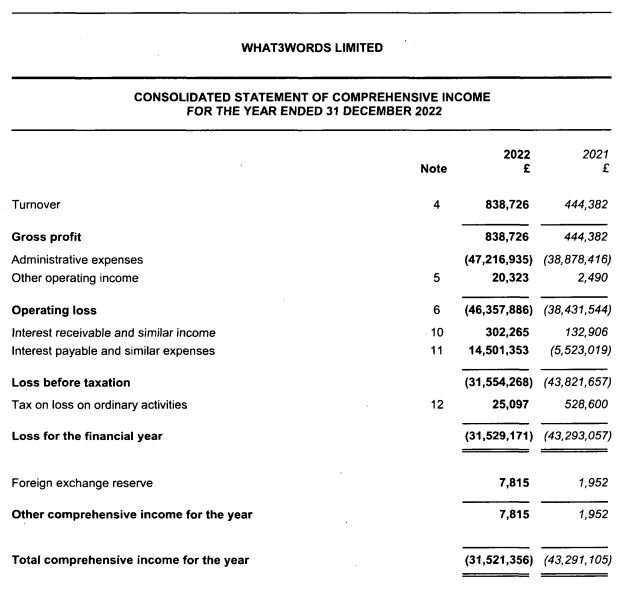
What3words – Raising Crowdfunding with one of the Worst Profit and Loss Statements I have Seen in a While

what3words is currently raising funding via crowdfunder – Crowdcube. I have always found What3words quite an interesting concept, so I thought I would dig into their numbers.

On the crowdcube pitch – it states – Over £100M in all-time funding – https://www.crowdcube.com/companies/what3words-2/pitches/lz91xq.

Why is what3words crowdfunding for a target of £1m when they have received over £100m though the company life – marketing purposes only ???

Attached is their P&L for 2022. While they have nearly doubled revenues from 2021 to 2022 – it still seems a giant world away from where they need to be to have raised over £100m in funding. They need to over 10x their current revenues to even get to a breakeven on the current valuation size.

Its going to be very interesting to see if this is possible and if it really solves a giant real world problem!

Browser Based Shazam – Chrome Extension – Identify Songs on Websites

A long time ago I wrote about Shazam and how they stopped producing the software as a Windows app.

Today I have come across the updated Shazam Chrome Extension.

Its available here in the Chrome app store – and already has over 3 million+ users.

No long will you come across a website and hear a track playing in the background and not know who released that track.

Twitter’s cash flow remains negative, Musk says, as ad revenue drops 50%

Elon Musk said on Saturday that Twitter’s cash flow remains negative, due to a nearly 50% drop in advertising revenue and a heavy debt load. Musk had previously said that he expected Twitter to reach cash flow positive by June.

“We’re still negative cash flow, due to ~50% drop in advertising revenue plus heavy debt load,” Musk said in a tweet. “Need to reach positive cash flow before we have the luxury of anything else.”

Twitter’s advertising revenue has been declining for several quarters. In the first quarter of 2023, advertising revenue fell 19% year-over-year. The decline in advertising revenue is likely due to a number of factors, including the ongoing war in Ukraine, rising inflation, and the increasing popularity of other social media platforms.

Twitter’s debt load is also a major concern. The company has about $13 billion in debt, which it used to finance Musk’s acquisition of the company. Musk has said that he plans to reduce Twitter’s debt load, but it is unclear how he plans to do so.

The combination of negative cash flow and a heavy debt load puts Twitter in a precarious financial position. If Twitter is unable to turn things around, it could be forced to sell itself or file for bankruptcy.

What does this mean for Twitter’s future?

The news that Twitter’s cash flow remains negative is a major setback for the company. It is unclear how Twitter will be able to turn things around, and there is a real risk that the company could be forced to sell itself or file for bankruptcy.

Musk has said that he is committed to turning Twitter around, but it is unclear how he plans to do so. He has proposed a number of changes, including reducing the company’s debt load, making the platform more user-friendly, and cracking down on spam and bots.

However, it is not clear if these changes will be enough to save Twitter. The company is facing a number of challenges, including the decline in advertising revenue, the increasing popularity of other social media platforms, and the ongoing war in Ukraine.

It is too early to say what the future holds for Twitter. However, the news that the company’s cash flow remains negative is a major setback, and it is clear that Twitter is facing some serious challenges.
What is IMDB for the Music Industry?

Over the years there have been a lot of companies try to build IMDB for the music industry. However, none have been able to get to scale.

I have a theory behind this…

IMDB is all about movies – in which is long form content and the audience spend at least a few hours of their life focused on watching something – for either entertainment or educational purposes. Spending that amount of time watching one thing – means the customer is willing to really dedicate time into it.

Music is the opposite.

Music is short form content that is consumed in a matter of minutes and then the consumer moves onto the next one. As technology improves and artists now have the ability to distribute their music to streaming services via distributors (like RouteNote) – it means there is also more music being created now than ever before. This type of content means that the customer isn’t as engaged or consumed by the content. Thus, not willing to spend a great deal of time to research about the music they are consuming.

We built Tunedex (via RouteNote) to help solve this problem for music, but we have since realised that this isn’t really a problem.

Designers sue Shein for allegedly using AI to steal their designs

A group of designers have filed a lawsuit against Shein, the Chinese fast-fashion firm, alleging that the company has been using artificial intelligence (AI) to steal their designs. The designers — Krista Perry, Larissa Martinez, and Jay Baron — claim that Shein’s AI algorithm is capable of identifying and copying popular designs from independent artists, and that the company has been using this technology to mass-produce and sell counterfeit versions of these designs.

The lawsuit, which was filed in federal court in New York, alleges that Shein’s practices violate the Racketeer Influenced and Corrupt Organizations Act (RICO). The designers are seeking damages for copyright infringement, trademark infringement, and unfair competition.

Shein has not yet responded to the lawsuit. However, the company has a history of being accused of stealing designs from independent artists. In 2021, Shein was sued by the American Apparel & Footwear Association (AAFA) for allegedly copying designs from AA member brands. The AAFA lawsuit is still pending.

The lawsuit against Shein is the latest in a growing number of cases alleging that AI is being used to facilitate copyright infringement. In recent years, there have been a number of high-profile cases in which AI-powered tools have been used to create counterfeit versions of popular products, including sneakers, handbags, and luxury watches.

The use of AI to steal designs raises a number of legal and ethical concerns. For one, it can be difficult to prove that a design has been copied by AI. Additionally, the use of AI to create counterfeit products can have a significant impact on the livelihoods of independent artists and designers.

The lawsuit against Shein is a significant development in the fight against AI-enabled copyright infringement. If the designers are successful, it could send a message to other companies that using AI to steal designs is not acceptable.

Here are some additional details from the lawsuit:

  • The designers allege that Shein’s AI algorithm is able to identify and copy designs that are trending on social media.
  • The designers claim that Shein has been using this technology to mass-produce and sell counterfeit versions of these designs at a fraction of the cost.
  • The lawsuit alleges that Shein’s practices have caused the designers to lose significant revenue and have damaged their reputations.

The lawsuit is still pending, and it is unclear how it will be resolved. However, the case raises important questions about the use of AI in the fashion industry and the potential for this technology to be used to facilitate copyright infringement.

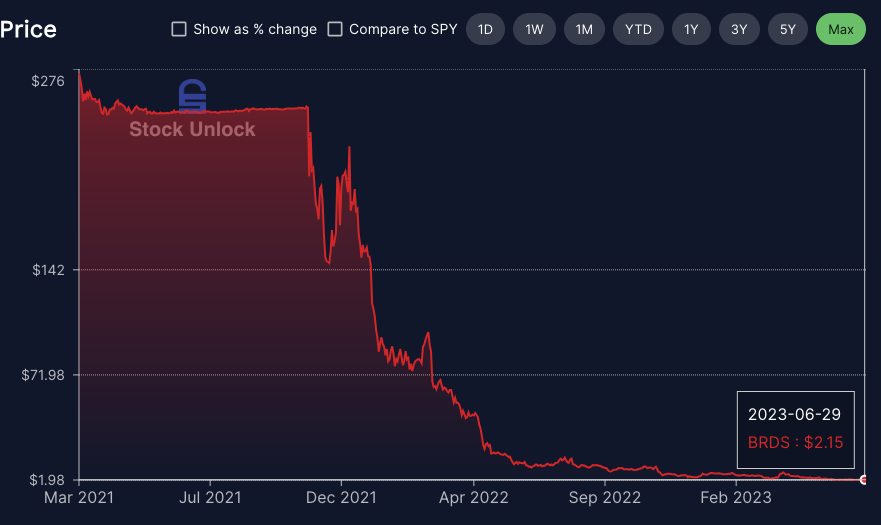
How Much Money Did Bird Mobility Raise Before Going Public?

Bird Mobility has to be the biggest bomb of Venture Capital in the past 10 years.

The company was founded in 2017 – and raised $2.25 billion in venture capital before going public in June 2021. Since that time it hasn’t really gone to plan in any way – market, valuation, revenues, operations, etc.

At todays date – Bird which is public on the NYSE under the ticker – BRDS – has a Market Cap of $26 million.

It might as well be worthless at this point!

Distrokid Increases Prices by 15% and Don’t Tell Their Customers

Distrokid, one of the leading music distribution services, has recently announced a 15% price increase across all of its plans. This news has come as a surprise to many of its customers, who are now left wondering how this change will impact their music careers.

Distrokid’s previous pricing structure was based on an annual subscription fee, with different plans offering various features and services. With this recent increase, the cost of the basic plan will go up from $19.99 to $22.99, while the Musician Plus plan will increase from $35.99 to $41.49 per year.

Distrokid has cited several reasons for this price increase, including rising overhead costs and the need to invest in new technology and features to stay competitive in the music distribution market. Despite these reasons, some customers are concerned that the price hike will disproportionately impact smaller independent artists and labels.

How Many People Currently Use the Yoast WordPress Plugin

Yoast is a popular search engine optimization (SEO) plugin for WordPress websites. The plugin has been around for over a decade and has gained a large following among WordPress users. But just how many people are currently using the Yoast WordPress plugin?

According to WordPress.org, as of June 2021, the Yoast plugin has been downloaded over 346 million times. This staggering number means that Yoast is the most popular SEO plugin for WordPress by a wide margin.

But downloads don’t necessarily equate to active users. To get a better estimate of the number of people currently using Yoast, we can look at the number of active installations. According to the WordPress plugin repository, there are currently over 5 million active installations of the Yoast plugin.

This number is constantly changing as new users discover the plugin and existing users switch to different SEO tools. However, it’s safe to say that Yoast is a widely used and trusted plugin among WordPress website owners.

So, why is Yoast so popular? The plugin offers a range of features to help website owners optimize their content for search engines. These features include on-page analysis, keyword optimization, XML sitemap creation, and more. Additionally, Yoast is easy to use and offers helpful tutorials and support for users.

In conclusion, the Yoast WordPress plugin is currently being used by over 5 million website owners. Its popularity can be attributed to its user-friendly interface and robust set of SEO features. If you’re looking to improve your website’s search engine rankings, it’s worth considering Yoast as a valuable tool in your SEO arsenal.

Current Wise.com Fees in the UK

Wise.com (formerly known as TransferWise) is an online money transfer platform that has become increasingly popular in recent years. One of the reasons for its popularity is its low fees, which have made it an attractive option for people looking to send money abroad.

However, with the recent changes to the fees structure, it’s important for users to be aware of the current fees before making any transactions. Here’s an overview of the current Wise.com fees in the UK:

Transfer Fees

Wise.com charges a transfer fee, which is based on the amount you are sending and the currency you are sending it in. The fee is usually a percentage of the total amount being sent and can range from 0.35% to 2% of the total amount.

Exchange Rate

Wise.com uses the mid-market exchange rate, which is the rate that banks use when trading currencies with each other. This means that the exchange rate you get is usually better than what you would get from a bank or other money transfer service.

Additional Fees

In addition to the transfer fee, Wise.com may also charge additional fees for certain transactions. For example, if you are sending money to a bank account that is not in your name, you may be charged an additional fee. Similarly, if you are sending money to certain countries, you may be charged an extra fee due to local regulations.

Conclusion

Overall, Wise.com fees are still relatively low compared to traditional banks and other money transfer services. However, it’s important to be aware of the current fees before making any transactions. By doing so, you can ensure that you are getting the best deal possible and avoiding any unnecessary fees.