Wise vs Revolut Fees (2026): Which Is Actually Cheaper? 

If you’re choosing between Wise and Revolut, fees are probably your biggest concern.

Both fintech companies promise low-cost international spending and transfers — but their pricing models are very different. One focuses on transparency. The other blends banking features with subscription perks.

Here’s a clear breakdown of how their fees compare in 2026.

1. Exchange Rates: The Real Cost Difference

Wise: Mid-Market Rate + Transparent Fee

Wise uses the real mid-market exchange rate (the rate you see on Google).
Instead of marking up the rate, it charges a separate, clearly displayed fee — typically between 0.35% and 0.7%, depending on the currency.

You see the exact fee before confirming the transaction.

What this means:
You always know what you’re paying.

Revolut: Near-Interbank Rate (With Conditions)

Revolut uses a near-interbank exchange rate and offers:

  • Free weekday currency exchange (within your plan’s limit)
  • 1% markup on weekends
  • Monthly FX limits on the free plan (e.g., €1,000 equivalent)

After exceeding the monthly allowance, additional exchanges incur a fee.

What this means:
It can be very cheap — but only if you stay within limits and avoid weekends.

2. International Transfers

Wise

Fees typically include:

  • A small fixed fee
  • A percentage-based fee

For example, sending €1,000 internationally might cost between €4 and €8, depending on the currency route.

Wise is often cheaper for:

  • Larger transfers
  • Regular overseas payments
  • Sending money outside Europe

Revolut

Revolut offers:

  • Some free transfers depending on your plan
  • Possible SWIFT fees for certain currencies
  • Limits on free international payments

Revolut works well for occasional smaller transfers, but costs can increase once limits are exceeded.

3. ATM Withdrawals

Wise

  • 2 free withdrawals per month (up to ~€200 total)
  • After that: ~€0.50 + 1.75%

Revolut (Standard Plan)

  • 5 free withdrawals per month (up to ~€200)
  • Then 2% fee

Higher-tier Revolut plans increase the withdrawal allowance.


4. Card Payments Abroad

Both are excellent for travel compared to traditional banks.

  • Wise: Small conversion fee applied transparently.
  • Revolut: No weekday FX fee within limits, but weekend markup applies.

If you travel mostly during weekdays and don’t exceed limits, Revolut can be cheaper for everyday spending.

5. Monthly Fees

Wise

  • No subscription plans
  • No monthly fee
  • Pay only when you use it

Revolut

  • Standard plan: Free
  • Paid plans: Plus, Premium, Metal (monthly fee)
  • Includes perks like insurance, airport lounge access, and higher limits

If you want an all-in-one banking app with extras, Revolut’s paid tiers may justify the cost.

So Which Is Cheaper?

Choose Wise If:

  • You send large international transfers
  • You want full transparency
  • You don’t want subscription fees
  • You care about always getting the real exchange rate

Choose Revolut If:

  • You travel frequently
  • You exchange smaller amounts
  • You stay within monthly FX limits
  • You avoid weekend currency exchanges
  • You want banking features beyond transfers

Final Verdict

There’s no universal winner.

  • Wise is usually cheaper for international money transfers and large currency conversions.
  • Revolut can be cheaper for travel spending — if you stay within plan limits.

For many people, the smartest move isn’t choosing one — it’s using both.

Why SaaS Stocks Crashed – And Why Most SaaS Companies Aren’t Going Anywhere

Over the past few years, SaaS stocks have been crushed.

Companies that once traded at 30x revenue fell 60–80%. Investors declared the “death of SaaS.” Growth-at-all-costs suddenly became a liability.

But here’s the reality:

SaaS isn’t dying. Bad pricing was.

Let’s unpack what actually happened.

The Zero-Interest Rate Bubble

Between 2015 and 2021:

  • Capital was cheap
  • Growth mattered more than profitability
  • Investors priced in perfect execution

Companies like:

  • Snowflake
  • Shopify
  • Zoom Video Communications

…were valued as if hypergrowth would last forever.

Multiples expanded beyond fundamentals. Revenue growth alone justified massive valuations.

That worked — until it didn’t.

What Actually Triggered the Crash

1. Rising Interest Rates

When rates rise:

  • Future earnings are discounted more heavily
  • Long-duration assets get hit hardest
  • Growth multiples compress

SaaS companies often promise profits far in the future. Higher discount rates crushed those valuations.

2. Slowing Growth

Enterprise customers tightened budgets.
Digital acceleration normalized post-COVID.
“Nice-to-have” tools were cut.

Even durable companies like Salesforce saw growth decelerate.

Markets repriced the entire sector.

3. Profitability Became Mandatory

The new environment demands:

  • Positive free cash flow
  • Efficient customer acquisition
  • Strong retention
  • Operating leverage

Companies that adapted survived. Others are still struggling.

Is the SaaS Model Broken?

No.

Recurring revenue remains:

  • Predictable
  • Sticky
  • High margin (at scale)
  • Operationally efficient

What changed is investor tolerance for inefficiency.

The Bottom Line

The SaaS crash wasn’t the death of the model.

It was the death of:

  • Growth without margin
  • Overfunded point solutions
  • Fantasy multiples

The next decade of SaaS will be smaller, leaner, and more profitable.

And that’s healthy

Grab is buying U.S. investing app Stash for about $425 million in a major cross-border fintech move 

Grab Holdings Limited, the Singapore-based super-app operator known for ride-hailing, delivery and digital financial services across Southeast Asia, has agreed to acquire Stash Financial, Inc., a U.S.-based digital investing and financial wellness platform, in a deal valuing Stash at roughly US $425 million.

Under the terms of the agreement, Grab will initially purchase a 50.1 % controlling stake in Stash at closing, with the plan to buy out the remaining equity over the next three years at fair market value. Payment for the deal will be made using a mix of cash and stock, with the exact mix at Grab’s discretion. The transaction is expected to close in the third quarter of 2026, subject to regulatory approvals and other customary conditions.

What Stash does & why it matters

Stash is a U.S.-registered investment advisor and fintech platform that combines subscription-based investing, banking tools, financial education resources and an AI-driven Money Coach feature designed to help everyday consumers improve their financial habits and long-term wealth outcomes. It currently manages more than US $5 billion in assets and has over one million paying subscribers.

The company also offers StashWorks, an employee financial wellness programme used by U.S. employers to help staff build better saving and investing behaviours through guidance and tools.

Strategic rationale for Grab

This acquisition marks a significant expansion of Grab’s financial services footprint into the U.S. mass-market investing space – a market where it previously had no commercial presence. It adds a recurring subscription revenue engine and deepens Grab’s fintech capabilities, particularly in areas powered by AI and personalised financial guidance.

Post-closing, Stash will continue operating as an independent brand, retaining its current services, business model and leadership – including its co-founders and co-CEOs — while gaining access to Grab’s broader ecosystem and resources. Grab has also indicated it may explore introducing elements of Stash’s technology, such as the AI Money Coach, into its Southeast Asian markets over the longer term.

For Grab, this move diversifies revenue beyond its core ride-hailing and delivery businesses and bolsters its financial services roadmap – which already includes lending, payments and digital banking – at a time when the company is increasingly focused on sustainable, high-margin services.

Ooni Pizza Oven now with AI Pizza Intelligence – Sounds slightly stupid

Have you ever looked at your pizza oven and wished it was just a little bit smarter? Ooni has, and so its new Volt 2 comes loaded with “Pizza Intelligence,” an adaptive heating system designed to deliver a more even and consistent cooking temperature.

Why does everything need to have the AI buzz word attached to it at the moment. An AI Pizza Oven – just sounds stupid.

It would be great if you could just put in the pizza and its cooks to the perfect temperature automatically, without having to program it at all.

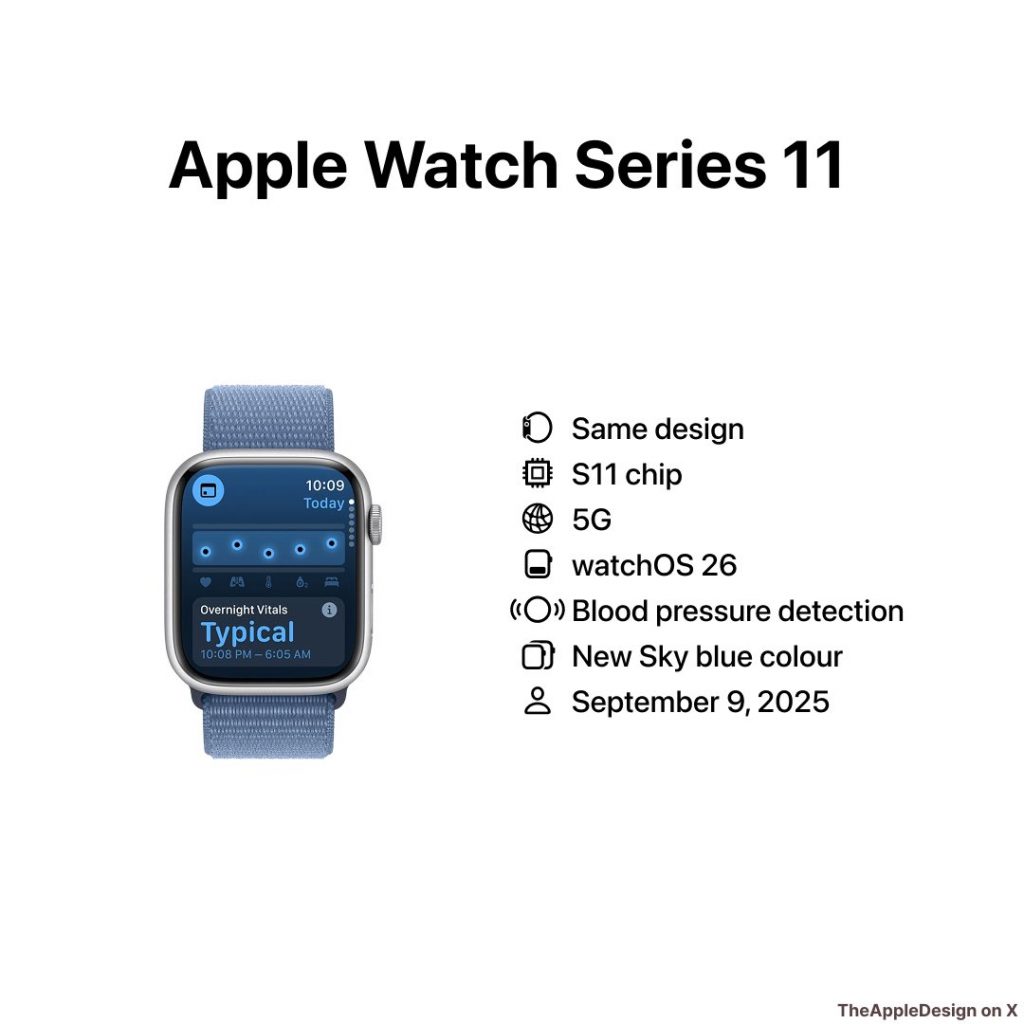
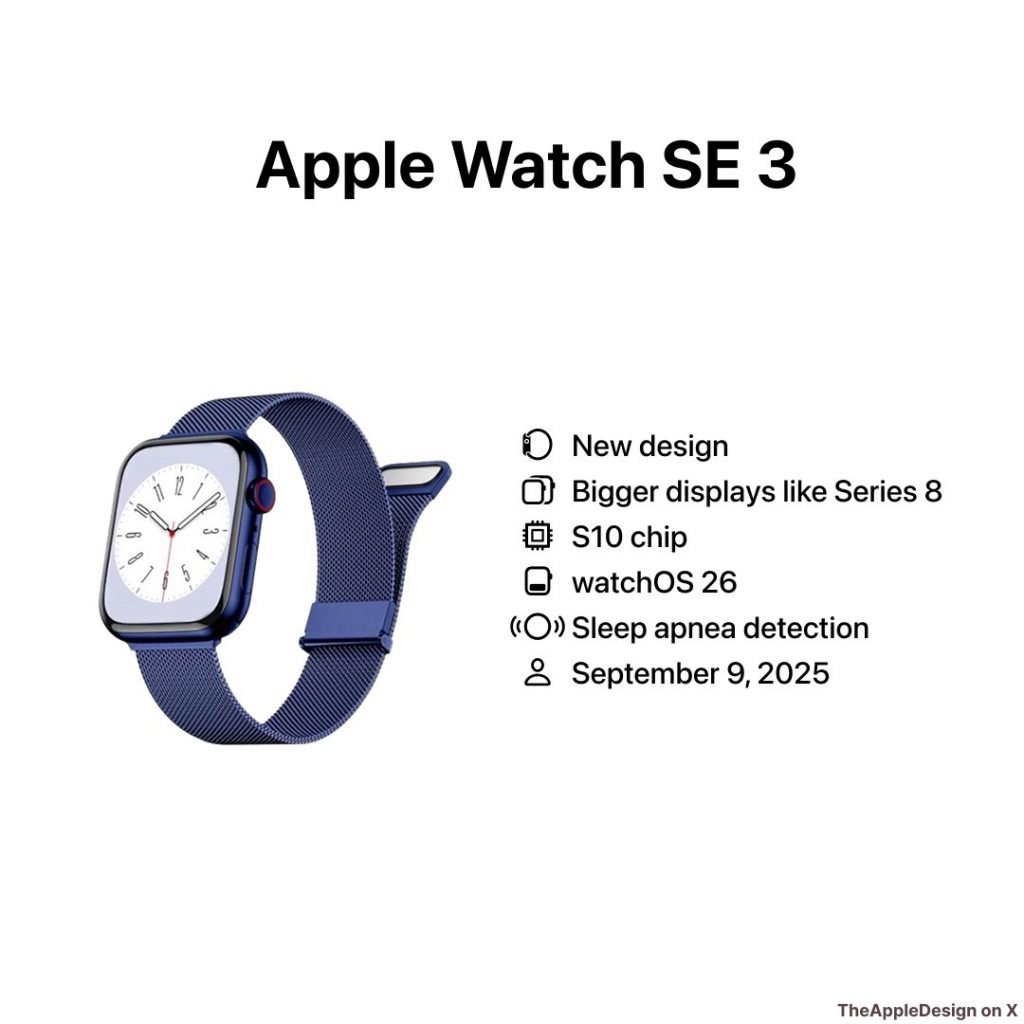
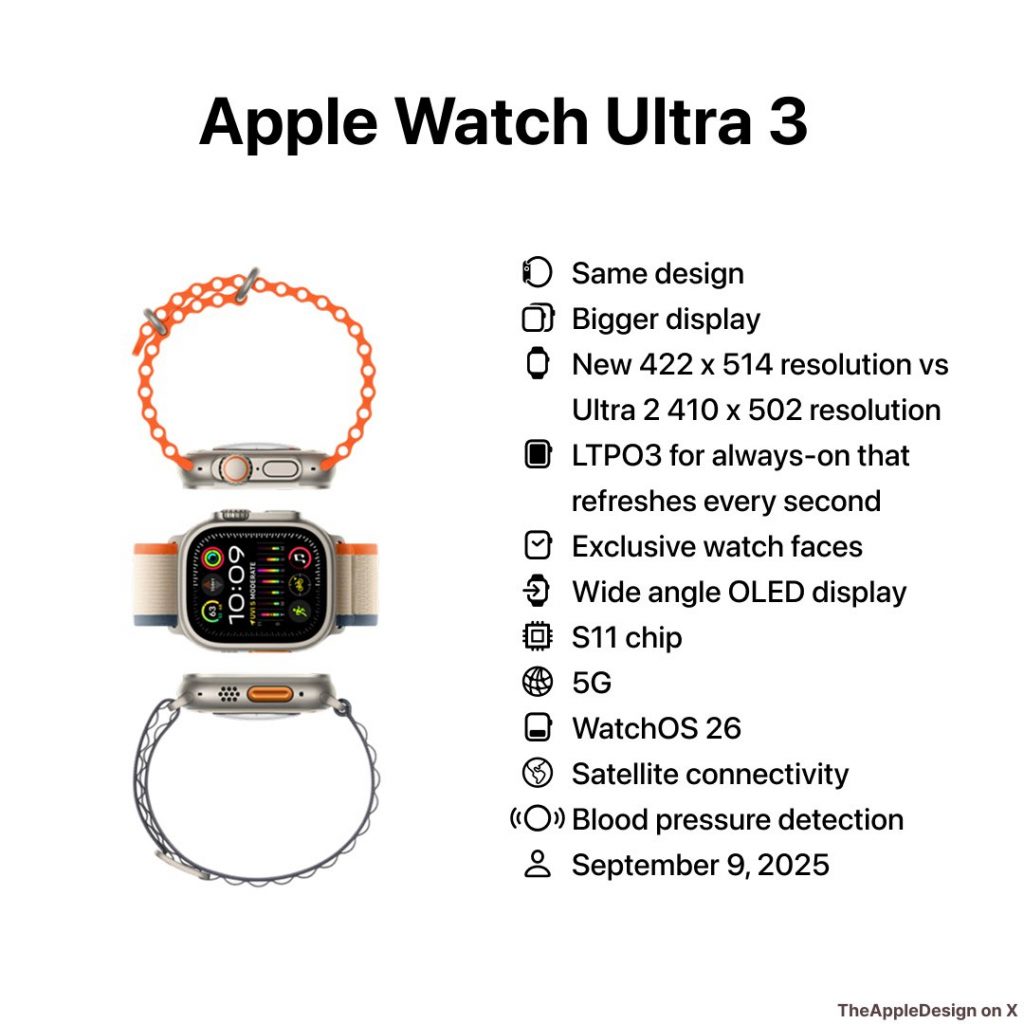
Upcoming Specs for Apple Watch Series 11, Apple Watch SE 3, and Apple Watch Ultra 3 – before the next Apple Event

There is a lot of talk about the specs of the new versions in the Apple Watch series – and here is what we know so far before the next Apple event. Full specs on Apple Watch Series 11, Apple Watch SE 3, and Apple Watch Ultra 3.

Can you buy single shares of Xiaomi or do you need to buy 200 shares at a time?

It all depends on where you buy the Xiaomi stock.

Hong Kong Stock Exchange (1810.HK)

  • On the HKEX, stocks trade in “board lots” (minimum trading units).
  • For Xiaomi (1810.HK) the board lot is 200 shares.
  • That means if you buy directly in Hong Kong, you have to buy at least 200 shares (or multiples of 200).
  • Example: If Xiaomi trades at HK$15, the minimum investment is HK$3,000 (~US$380).

U.S. OTC Market (XIACF, XIACY)

  • In the U.S. OTC market, you can buy single shares (no board lot restriction).
  • So if you’re using a U.S. or international broker that gives access to OTC, you can buy 1 share, 10 shares, 37 shares — whatever you like.

How can I buy shares of Xiaomi and under what ticker symbol

Ticker Symbols & Where to Buy

1. Hong Kong Stock Exchange (Primary Listing)

  • Ticker: 1810.HK (often just “1810”)
  • That’s Xiaomi’s main public listing and the one most commonly used by investors. You’d buy this through a broker that provides access to Hong Kong markets.

2. Over-the-Counter (OTC) in the U.S.

  • Tickers: XIACF and XIACY
  • These are U.S. OTC representations (likely ADRs or Pink Sheet listings). They let U.S.-based investors access Xiaomi without needing a Hong Kong broker.

Levelsio Investment Portfolio Google Doc – ETFs and One off stock investments

Levelsio on X – has started to share a Google Doc with all his investments. Its a very interesting mix between ETFs and one off stocks.

Take a look here – levels.vc

It shows the power of VC investing over time. One third of all money he makes is from his investments.

Levels has risen to fame through the X platform where is creating a lot of content and been posting about technology, finance, startups, etc.

TikTok’s UK Subsidiary Files Company Financials / Revenues for Europe, UK, Latin America and Africa

TikTok’s UK subsidiary has published its latest financial results covering operations in Europe, the UK, Latin America and Africa. The report shows revenue growth of 38% to $6.31bn in 2024, while the company significantly reduced its operating losses from $1.37bn in 2023 to $484.6m last year.

Filed with Companies House in the UK, these results primarily address financial performance rather than user statistics. However, earlier this year TikTok separately disclosed user numbers for the European Union. The platform reached 159 million monthly active users across the EU by the end of 2024, with its largest markets being France (25.1 million), Germany (24.2 million), Italy (22.8 million) and Spain (21.9 million).

Revolut is now Lithuania’s largest bank, after only five years


Revolut has achieved a remarkable milestone: it is now the largest bank in Lithuania by assets, just five years after securing its license there. According to the central bank, Revolut now commands 30.8% of the Lithuanian market, overtaking long-time leaders Swedbank (24.4%), SEB (19.6%), Luminor (10.5%) and the recently rebranded Artea (6.6%).

Licensed in Lithuania but serving 50 million customers across 30 EEA countries, Revolut has rapidly grown its local footprint with more than 650,000 Lithuanian clients. In 2024 alone, retail customers grew 24%, business clients 57%, and youth accounts 47%. This year, Revolut also entered the housing loan market, further cementing its presence alongside its full suite of digital banking, credit, investment, and savings products.

Intel gets new shareholders – Softbank and the US Government

SoftBank has invested $2 billion in Intel.

SoftBank Group Chairman and CEO Masayoshi Son said in a statement that the “strategic investment reflects our belief that advanced semiconductor manufacturing and supply will further expand in the United States, with Intel playing a critical role.”

This is mixed with the US Government also announcing that they will take a 10% stake in Intel.

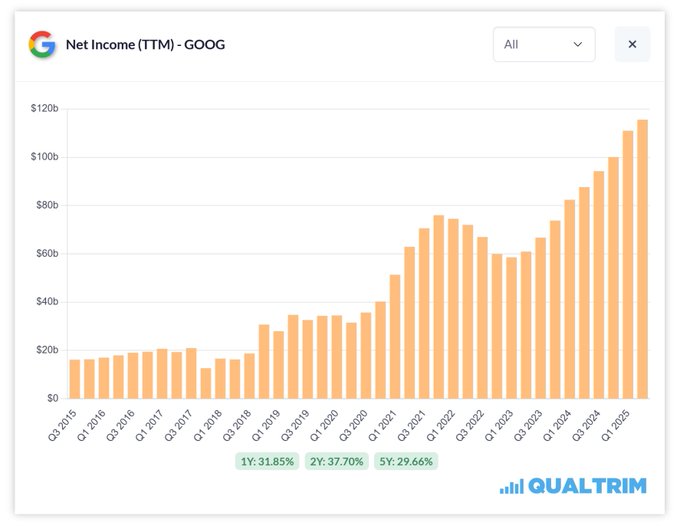
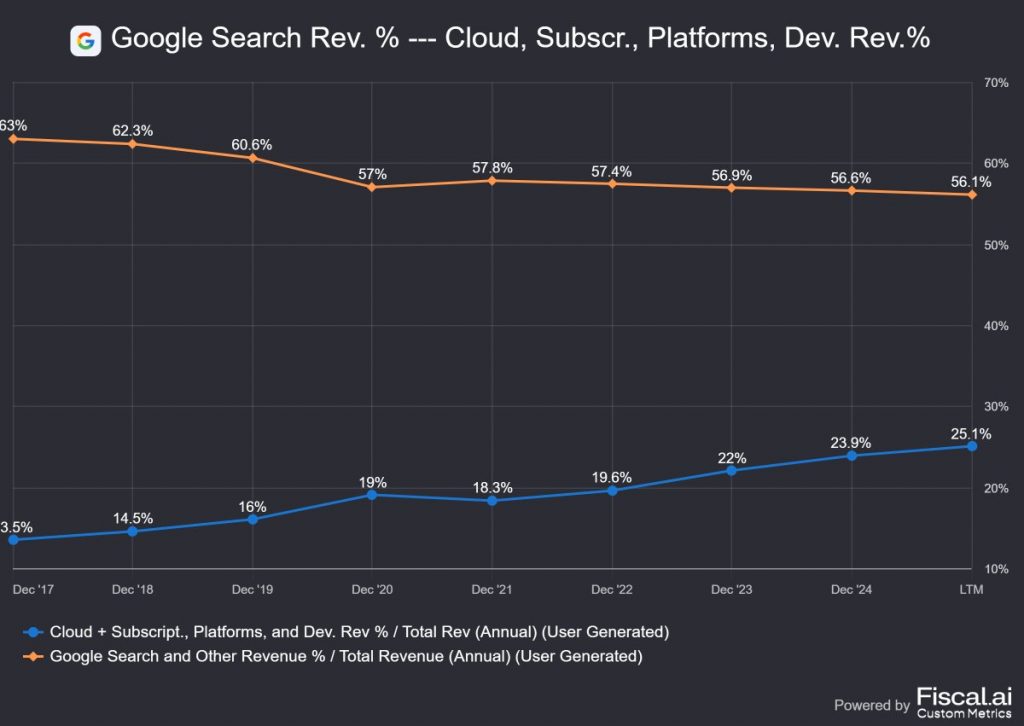
Google Search revenues becoming smaller as a percentage of total Google revenues – cloud, subscriptions and YouTube rising fast!

Alphabet’s revenues are become more diverse over time – and quickly!

Google Search revenues now make up only 56.1% of their total revenues and the gap is getting smaller every quarter.

Google Cloud is driving growth in the other areas, but YouTube is also climbing fast as well as other subscriptions and devices (and lets not even talk about Waymo and its potential).